Sprint Studies for the i2x Roadmap
The Interconnection Innovation e-Xchange (i2X) is a partnership platform to bring together diverse stakeholders involved in the interconnection of solar and wind energy resources to the electric grid. i2X is a program of the U.S. Department of Energy’s (DOE) Solar Energy Technologies Office (SETO) and Wind Energy Technologies Office (WETO), funded under the Bipartisan Infrastructure Law (BIL). Pacific Northwest National Lab (PNNL), National Renewable Energy Lab (NREL), and Lawrence Berkeley National Lab (LBNL) support SETO and WETO in i2X.
To address increasingly pervasive climate concerns and achieve deep decarbonization in alignment with the Biden Administration’s 2035 decarbonization goals, the electric grid is transforming rapidly, with interconnection processes for solar and wind resources becoming more complex as penetration levels increase. Throughout the United States, queue times to interconnect solar and wind have been rising, jeopardizing ambitious state-level decarbonization goals. i2X will develop innovative solutions and provide technical assistance to enable faster, simpler, and fairer interconnection of solar energy, wind energy, and energy storage resources while ensuring the electric grid reliability and resilience.
i2X will publish a roadmap incorporating analytics from two sprint studies, augmented by learnings from the technical assistance projects. Each sprint study will be tightly scoped, with feedback from the i2X community, to be completed in six to nine months. The first sprint study will focus on a better queue. Some of the ideas include better automation, clustered impact studies, and sharing of grid upgrade costs. The second sprint study will focus on queue alternatives, for example, an auction-based process of hosting capacity or grid needs, informed by experience with auctions of broadband spectrum. There may be cross-cutting improvements to achieve more equitable outcomes, not just more economically efficient outcomes. The metrics and simulation tools will support analysis of both equity and economic outcomes.
The proposed sprint study design intends to first establish a baseline model of the first-come, first-served interconnection queue process, and then measure changes against this baseline of proposed improvements and alternatives to the queue. Some of these improvements include: increased access to information prior to entering the queue; mechanism to study interconnection requests in groups (i.e., clusters); increased financial commitments; increased readiness requirements; availability of optional informational interconnection studies outside of the queue process. The baseline transmission and distribution system interconnection queue models proposed for this effort are described in the figures below.
State Machine Models
BES Interconnections
Figure 1 captures the key states within the interconnection queue, with the probability of movement between states determined by a set of dependent parameters, (x_i ) ?, described below.
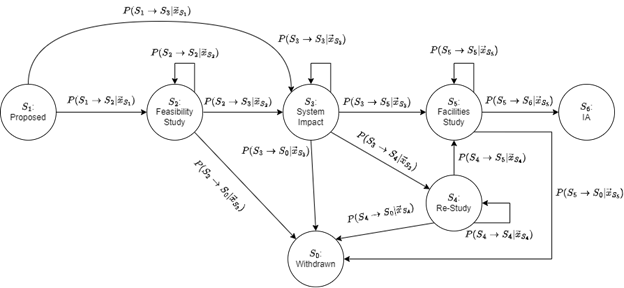
Figure 1: State diagram for the transmission system interconnection queue process
Optional Informational Study
Conditional Parameters for Transitions out of S1: Proposed.
Readiness
Permitting requirements/status
Site control
Commercial readiness
Land use restrictions
Application fees paid
Project jurisdiction
Scoping Meeting
Feasibility Study
Outcomes: Application Validation/Acceptance/Approval of Negligible Impact Interconnections
Conditional Parameters for Transitions out of S2: Feasibility Study
Strictly Time Dependent
Current simulation time
Time of submission to study
Interconnection Queue Specific
Violation/cost estimates
Project size
Project location
Project complexity
Withdrawal penalties
Accumulators
Project budget
Fees spent
Time spent [person-hours]
Outcomes: Estimated system upgrades, costs, and implementation timeline
Conditional Parameters for Transition out of S3: System Impact
Strictly Time Dependent
Current simulation time
Time of submission to study
Cluster window, if applicable (annual, semi-annual, etc.)
Interconnection Queue Specific
Cluster vs individual
Type of cluster (geographic, electric, etc.)
Number of projects in cluster
Capacity of cluster
Project size
Project location
Project complexity
Cost allocation estimate (and/or difference to estimate from feasibility study/informational study)
Withdrawal in lower (or equal in case of clusters) queue positions (triggering re-study)
Withdrawal penalties
Accumulators
Project budget
Fees spent
Time spent [person-hours]
Outcomes: identifies system upgrades (as needed), refined estimate of cost & implementation timeline, notification of necessary re-study
Conditional Parameters for Transition out of S4: Re-Study. This state should be identical to S3 in terms of its dependencies with the following exceptions
No cluster window
Limit on number of re-studies
No further withdrawals
Includes affected system studies
Conditional Parameters for Transition out of S5: Facilities Study
Strictly Time Dependent
Current simulation time
Time of submission to study
Interconnection Queue Specific
Difference in cost estimation of System Impact and Re-Study
Project size
Project location
Project complexity
Withdrawal penalties
Accumulators
Project budget
Fees spent
Time spent [person-hours]
Outcomes: cost for facilities and upgrades (engineering, equipment, procurement, and construction), detailed estimates of time to procure, construct, and install upgrades.
The players that can influence these probabilistic parameters include: the interconnection applicant; other interconnection applicants ahead in the queue (first-come, first-serve); other interconnection applicants within the queue (cluster); electric service provider; regulator. Outside influences on these parameters include: access to information prior to entering the queue, such as hosting capacity maps; current queue status; estimated upgrade costs, including the cost allocation protocol for clusters; and optional information study.
DER Interconnections
Figure 2 captures the key states within the distribution system interconnection queue, based on the NY PUC Standardized Interconnection Requirements and Application Process, with the probability of movement between states determined by a set of dependent parameters, (x_i ) ?, described below.

Figure 2: State diagram for the distribution system interconnection queue process
Inquiry and Inquiry Review
Optional request for pre-application report
Conditional Parameters for Transitions out of S1: Proposed.
Readiness
Permitting requirements/status
Site control
Land use restrictions
Application fees paid
Strictly Time Dependent
Time of submission to review
Interconnection Queue Specific
Completeness of Application
Project size
Project location
Project complexity
Scoping Meeting
Accumulators
Project budget
Fees spent
Time spent [person-hours]
Outcomes: Notification of Acceptance, notice of plans to witness test/verification process, cost estimate for interconnection facilities/distribution upgrades
Conditional Parameters for Transitions out of S2: Preliminary Screening Analysis
Strictly Time Dependent
Time of submission to review
Interconnection Queue Specific
Project size
Project location
Project complexity
Passes Technical Screens
Elect Preliminary Screening Analysis Results Meeting
Elect Supplemental Screening Analysis
Elect Full CESIR (Coordinated Electric System Interconnection Review)
Cost allocation estimate
Accumulators
Project budget
Fees spent
Time spent [person-hours]
Outcomes: Interconnection Acceptance or Notice of failure to pass technical screens, cost allocation estimate for interconnection facilities/distribution upgrades or cost estimate for CESIR
Conditional Parameters for Transitions out of S3: Supplementary Screening Analysis
Strictly Time Dependent
Time of submission to review
Interconnection Queue Specific
Project size
Project location
Project complexity
Elect Supplementary Screening Analysis Meeting
Elect Full CESIR
Accumulators
Project budget
Fees Spent
Time spent [person-hours]
Outcomes: Interconnection Acceptance or Notice of failure to pass technical screens, cost estimate for interconnection facilities/distribution upgrades or cost estimate for CESIR
Conditional Parameters for Transitions out of S4: CESIR
Strictly Time Dependent
Time of submission to review
Interconnection Queue Specific
Project size
Project location
Project complexity
Updated interconnection design package, if necessary
Requested electrical studies/three-line diagram
Accumulators
Project budget
Fees spent
Time spent [person-hours]
Outcomes: Utility system impacts review, system compliance review, cost estimate for interconnection facilities/distribution upgrades, qualifying upgrade disclosure
Ideas from Project Plan and Engagements
Identify at least two different improvements to the current queue-based DER interconnection process that could provide measurable improvement. These may include:
Incremental queue enhancements, e.g., clustering, tool automation, shared cost of circuit upgrades.
Queue replacements, e.g., a proactive auction-based process to fill hosting capacity and/or grid needs.
Soft improvements, such as providing education about the interconnection process for targeted groups.
New tools, such as a “PVWatts for grid connections.”
Adoption of modern standards like IEEE 1547-2018 and IEEE 2800-2022, which could lead to regularization of processes between states and to new technical design practices.
Separate process improvement for more equitable outcomes, not just more economically efficient outcomes. The metrics and simulation tools will support analysis of both equity and economic outcomes.
Develop scoping plans for sprint studies that will analyze and compare the process improvement proposals. Obtain scope approval from DOE, with input from the Technical Advisory Group. Recruit stakeholder participation. Perform the sprint study using open-source tools and data sources. Follow procedures to maintain data privacy and business confidentiality. Preserve the data, tools, and analysis on the i2X web site, as nondisclosure agreements and privacy issues allow.
Compare empirical results from simulated processes with voluntary participation by utilities and DER applicants. The simulated process may run in parallel with the actual process. Identify participants, data sources, targeted stakeholder sectors, and states to participate in these experiments. Interview participants about how they made their decisions to approve or disapprove an application, to withdraw an application from the queue, etc. Publicly available test systems may be used in this work.
Define a public system with electric power grids (as realistic as possible to existing), and configurable DER application queues. The cost and schedule metrics may define specific components to be included, e.g., impact study costs, network upgrade costs, and certain commissioning delays. New tools may simulate the results of a baseline queue management based on current queue-based DER interconnection process and the two future queue management options, over a ten-year period. The baseline and options may be compared based on i2X metrics. Monte Carlo and Pareto methods may be applied to account for uncertainties, trade-offs, and minimum regret goals.
Queue-Based Mechanism
The analytical evaluation of queue management options would use a state-machine model of the Queue, as discussed earlier, in conjunction with a grid model to simulate location-dependent hosting capacities and grid upgrade costs.
Assume clusters per NOPR
Incorporate new equity metrics
Shared costs of system upgrades
When is a project ready to proceed?
Site control and power purchase agreement
Payments to stay in queue
Project financing in place
Cluster formation and management options
Model building improvements
Tool and re-study automation
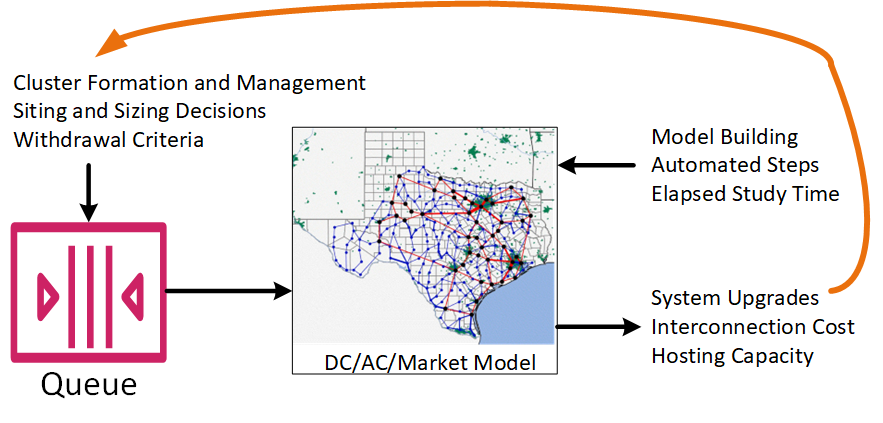
Simulation-based Evaluation of Queue Management Options
Auction-Based Mechanism
An auction of renewable connection capacity would completely bypass the interconnection queue. The resource requirements, available locations, and hosting capacities would be pre-determined. Minimum bid levels could be required to cover any grid upgrade costs
Parallels to wideband spectrum auction
Relationship between resource procurement processes, often under state jurisdiction, and interconnection processes under FERC jurisdiction
Set-asides for communities and underserved populations
Incorporate new equity metrics
Identifying locations and quantities for new solar and wind resources
Investing in renewable energy development zones (transmission)
Requirements to participate
Bid clearing mechanisms
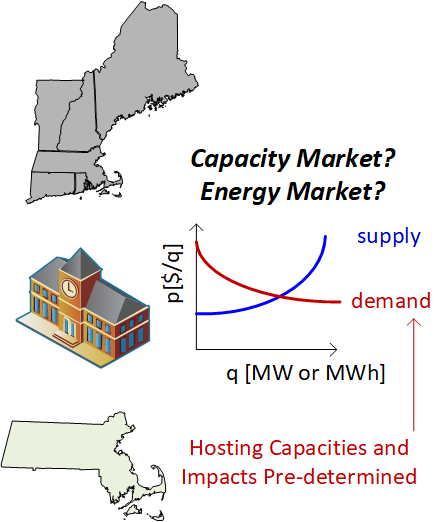
Auction-based Alternative to the Queue
Coverage from First Round of Sprint Studies
The following table describes three general improvements to the queue-based process, one of which is the auction-based alternative. The project plan calls for only two improvements in the first round, one of which would be the auction-based process.
Improvement |
System and Scenario |
Expected Outcomes |
|---|---|---|
Study Automation |
WECC: 3-month cluster studies
118: 1-month project studies
9500: 1-month project studies
LVN: 3-month cluster studies
|
Reduced cost of studies
Reduced time of studies
|
Shared Upgrades |
WECC: Series capacitors
118: Transmission lines
9500: Inverter functions
LVN: Network protectors
|
Reduced variabilty in grid upgrade cost |
Auction of Capacity |
WECC: add 30% renewables
118: add 20% renewables
9500: community-based wind
LVN: community-based solar
|
Reduced variability in cost
Reduced variability in time
Reduced total study costs
Reduced grid upgrade costs
|
Deferrals from the first round of sprint studies:
Targeted improvements on the acceptance rate of applications. There will be outputs of acceptance rate, but we don’t know the effect ahead of time and have not chosen improvements with a goal of increasing the acceptance rate. This was a relatively new suggestion from DOE in the leadership meeting discussion of metrics for i2X.
Energy equity and environmental justice (EEEJ) effects. This depends on the definition and acceptance of EEEJ quantitative metrics.
Additional test systems and suggested improvements, which might come from technical assistance (TA), solution exchanges, or sponsor suggestions. These can be added to the sprint study platform in future work.